
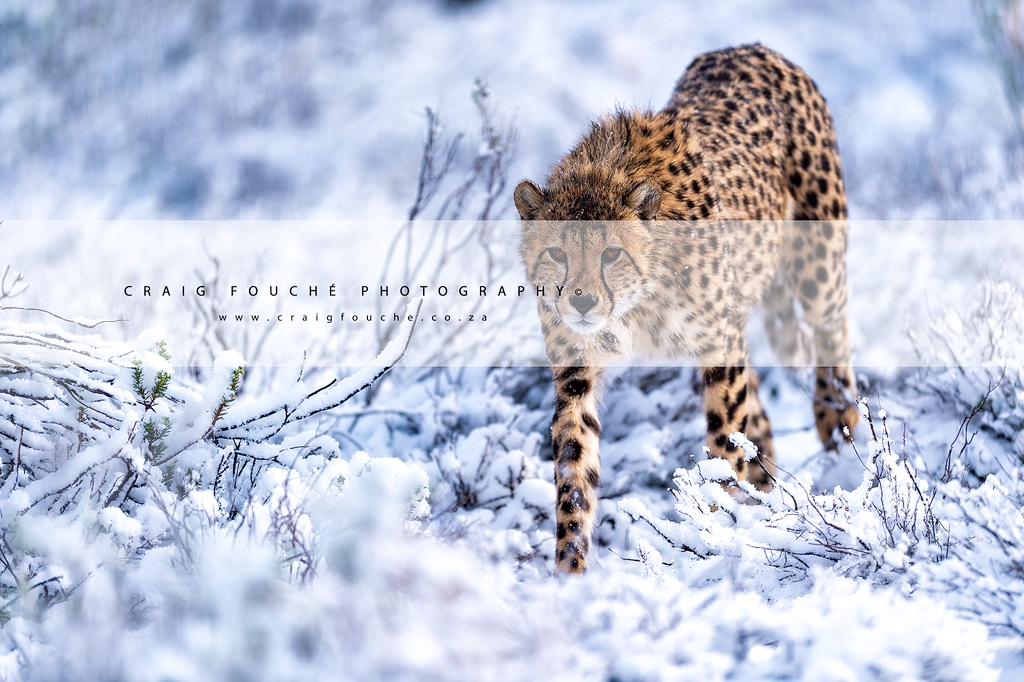

Snow Cheetahs Of South Africa
August 29 2020
My friend Kirsten and I chatted about the rarity and prospect of photographing cheetahs in the snow after a trip to Sutherland, South Africa, of which there are very few images available online. About two weeks later we were following weather reports of an upcoming cold front which held great promise for plenty of snow and was not disappointed. The Snow Cheetahs of South Africa was becoming a reality. I give you an account of my experience a year later after Kirsten and I photographed these beautiful cats together under extreme conditions.

Snow Storm At Rogge Cloof
The Shoot
Day 1
With the assistance of Sam, a field guide at Rogge Cloof Nature Reserve outside of Sutherland, South Africa, we spent two days tracking radio-collared cheetahs in sub-zero temperatures. Sutherland is the coldest town in South Africa, with an average yearly temperature of 11.3 °C and an average annual minimum temperature of 2.8 °C; although the farm Buffelsfontein near Molteno holds the official lowest temperature record in Continental South Africa, of -20.1 °C.


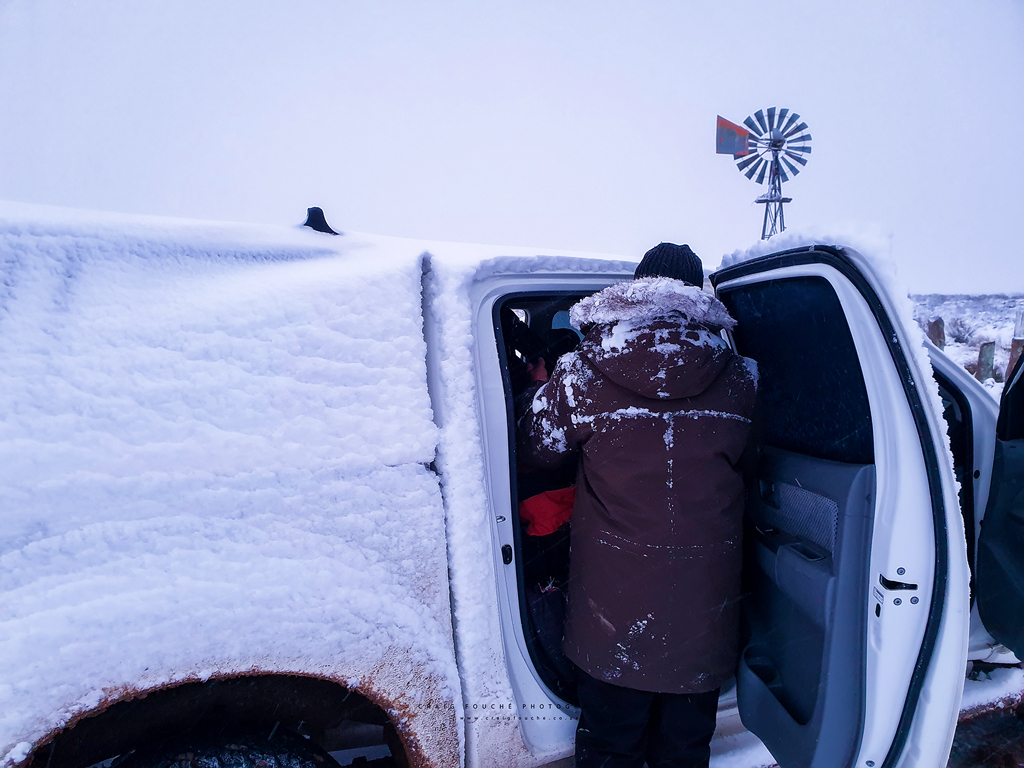
10cm Of Snow
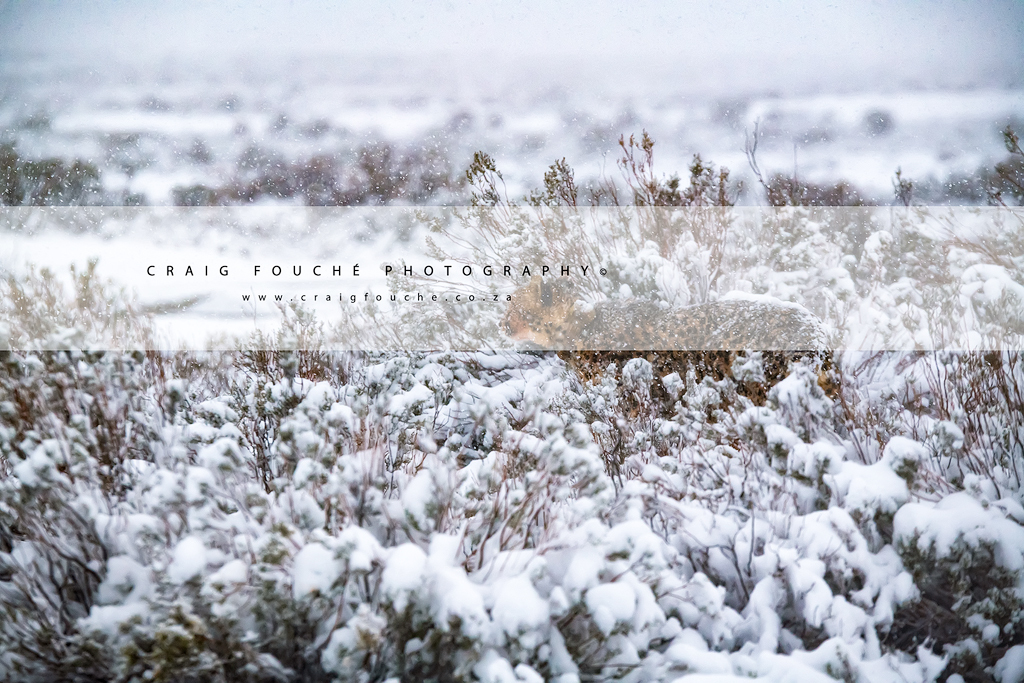
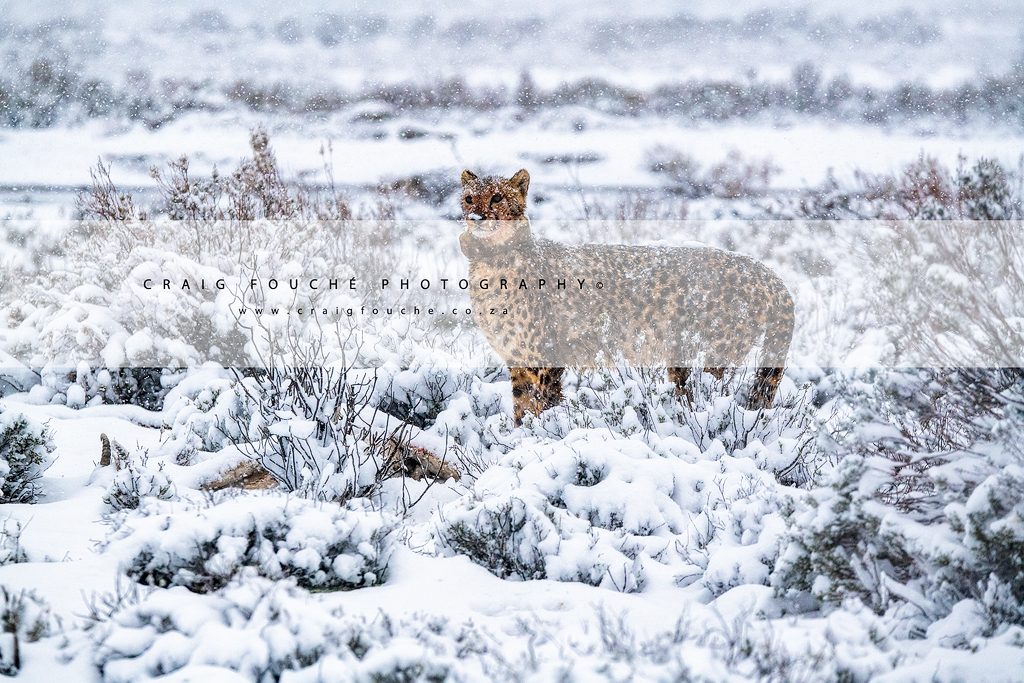
Whilst tracking Mona, the oldest cheetah on the reserve on foot at approximately 17h00 in the evening it was around -7 °C. Kirsten was the first to spot her lying under a small bush where she was so well camouflaged, covered by a thick blanket of snow. To our surprise, we found that she had made a fresh Springbok kill and had recently been feeding off of it. There was about a 10cm dumping of snow in places during the time spent with her. We spent about an hour looking for her and photographing her in very difficult and challenging snowstorm conditions. My lenses froze up and frosted over many times, I had no visible viewfinder as it had iced up and had to use live view on my camera to capture these images. The other challenge was the autofocus system which tended to lock on to snowflakes falling in front of her.
Mona is a very adaptable female cheetah and has learnt that she does not need to eat as quickly as other cheetahs in other reserves. The cold climate helps preserve her food for longer and she can eat leisurely while still having plenty to eat. This limits the need to hunt as frequently and she can preserve her energy for longer. As she is much older, her hunting strategy has become more ambush orientated as opposed to a normal hunting method.
Day 2
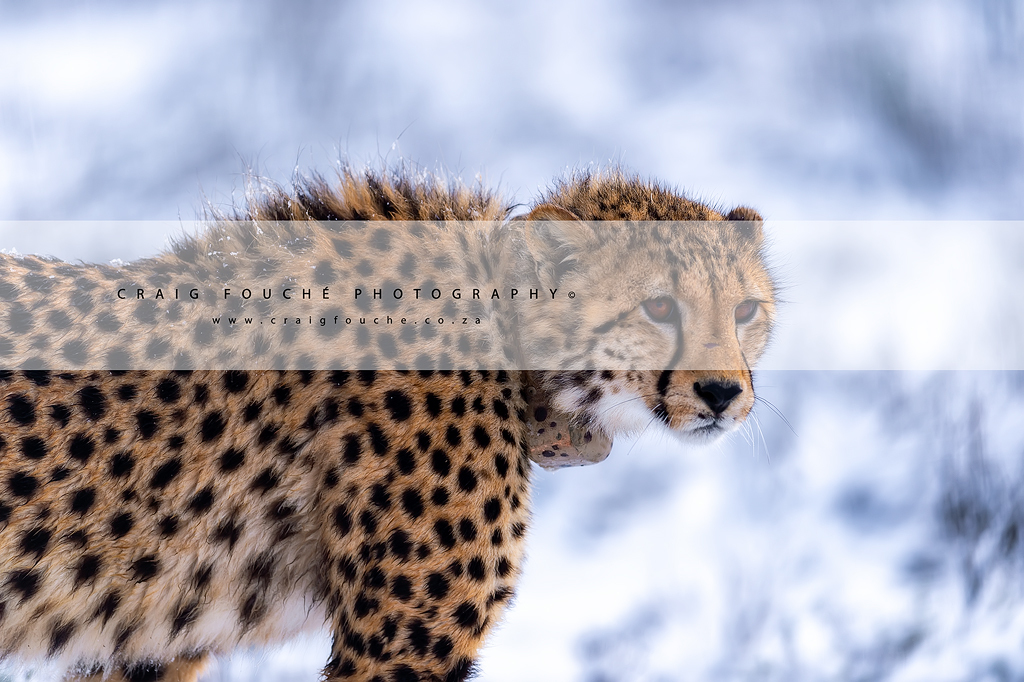
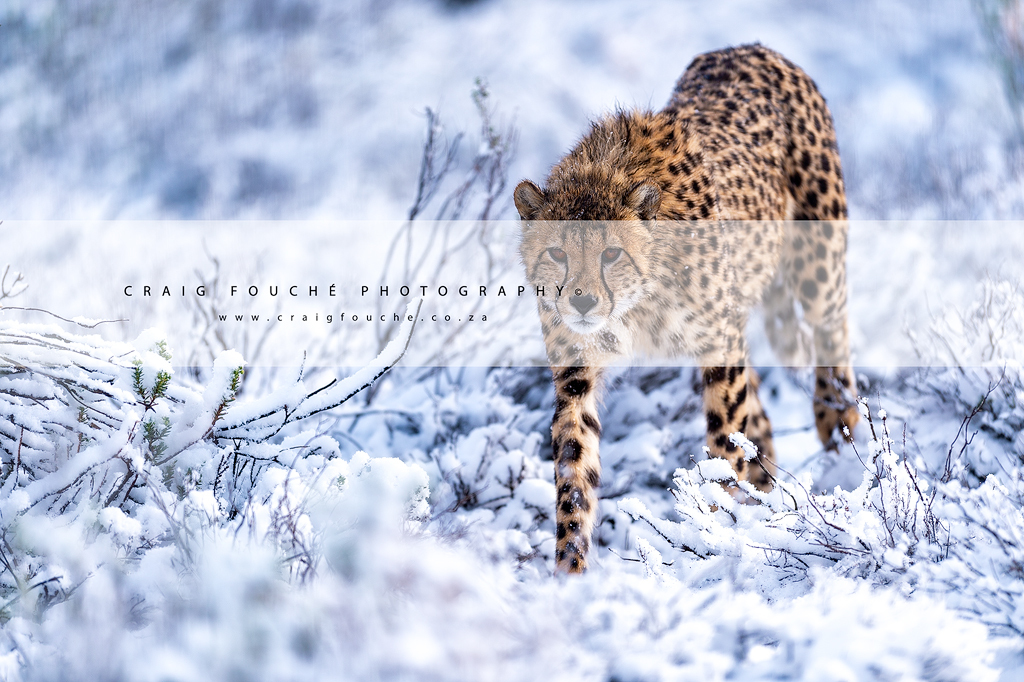
We planned that evening to follow up the next day to see if we could get more photographs of Mona. The weather eased up and the previous days’ thick snow started to melt rapidly during the morning. By lunchtime, the scenery had been rapidly transformed from a thick blanket of snow to sparsely scattered patches of snow, revealing a more traditional Karoo landscape. Again we went out to photograph Mona on foot, with Sam finding Mona relaxed, in the same spot and still with her kill. She was comfortable with us, and we were able to photograph her, even as she ate. During our stay, we were also able to photograph two male cheetahs in the snow.
My Experience With The Snow Cheetahs Of South Africa
This has been a very unique and rare wildlife experience for me. Who would have thought that cheetah could occur in the snow? At the time of photographing, as I understand it, these are the first professional images of cheetahs in the snow and likely to be the second known recordings of African cheetahs in the snow. Vincent van der Merwe of EWT’s team took what he believes are the first photos in 2014 at Mount Camdeboo Game Reserve, South Africa. A recent photo was taken in June 2021 by Leslie Slabbert of cheetahs in the snow at Mount Camdeboo Game Reserve, South Africa.
The cheetahs at Rogge Cloof Nature Reserve are part of the South African Cheetah Metapopulation Project. This project was launched in 2011 by the Endangered Wildlife Trust, a non-profit organisation with the primary intention being to make the metapopulation self-sustaining by addressing all the issues that had resulted in the cheetah population decline. South Africa is one of the only countries whose cheetah numbers are rising thanks to sterling conservation efforts by organisations like EWT and reserves like Rogge Cloof Nature Reserve. The 18000 ha reserve at the time of the shoot had a total of eight cheetahs, three cubs were born on the reserve that winter.
Kirsten’s images were published in National Geographic and mine in Weg/Go! Magazine, issue #192, October/November 2020.
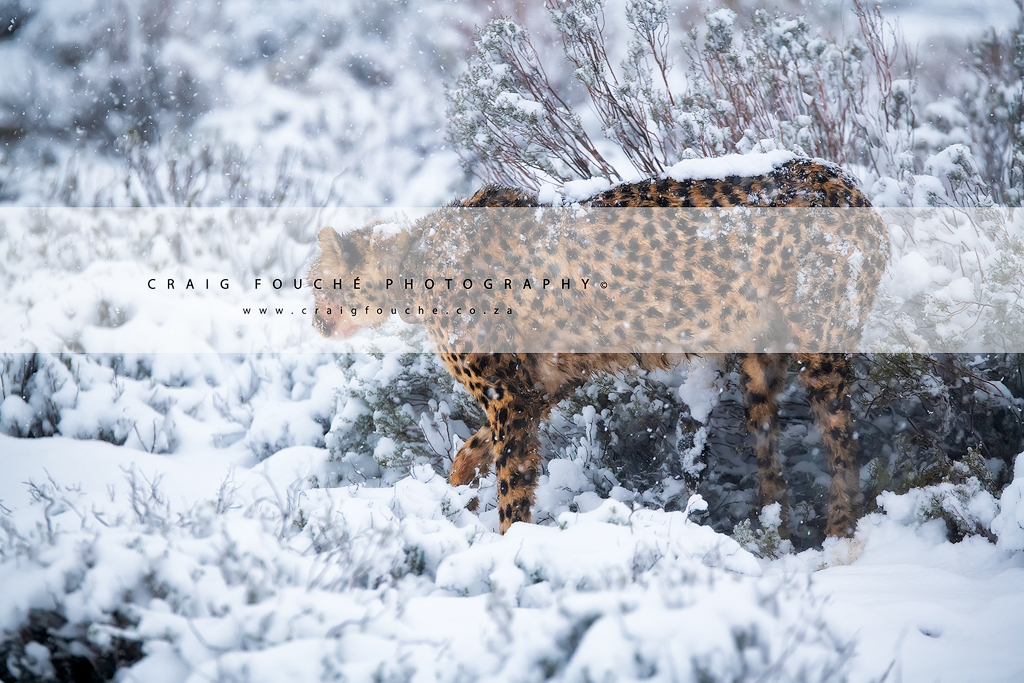
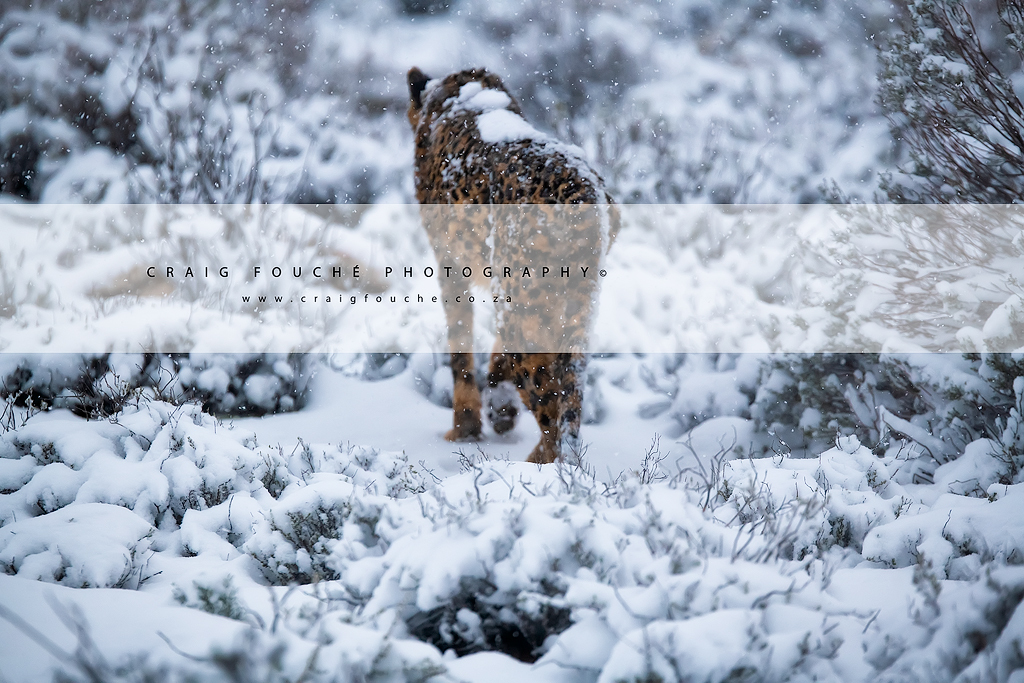
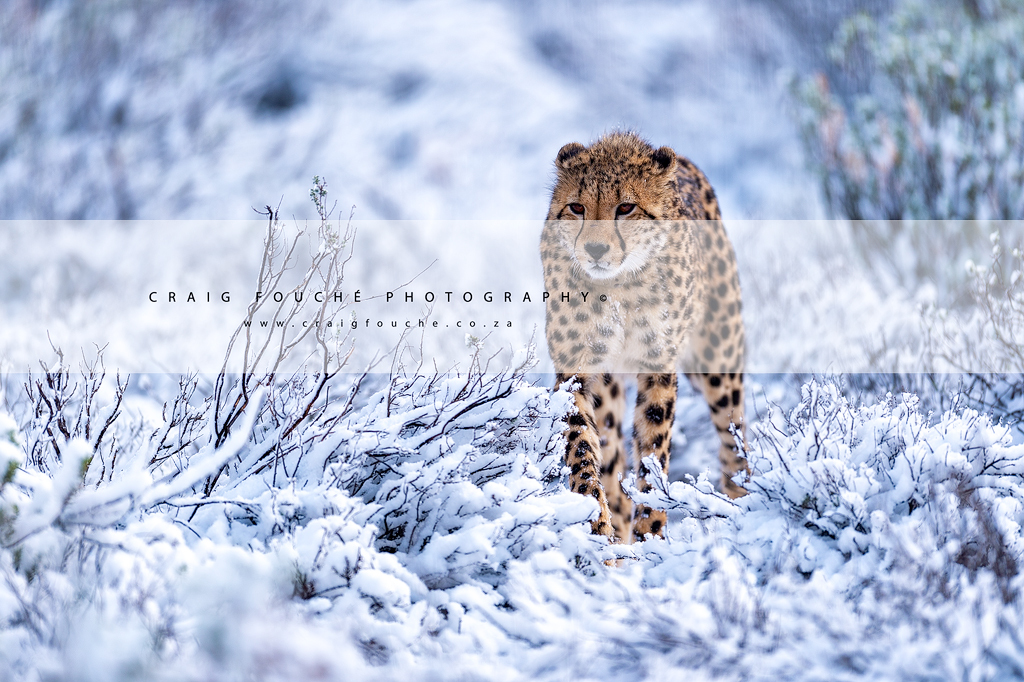

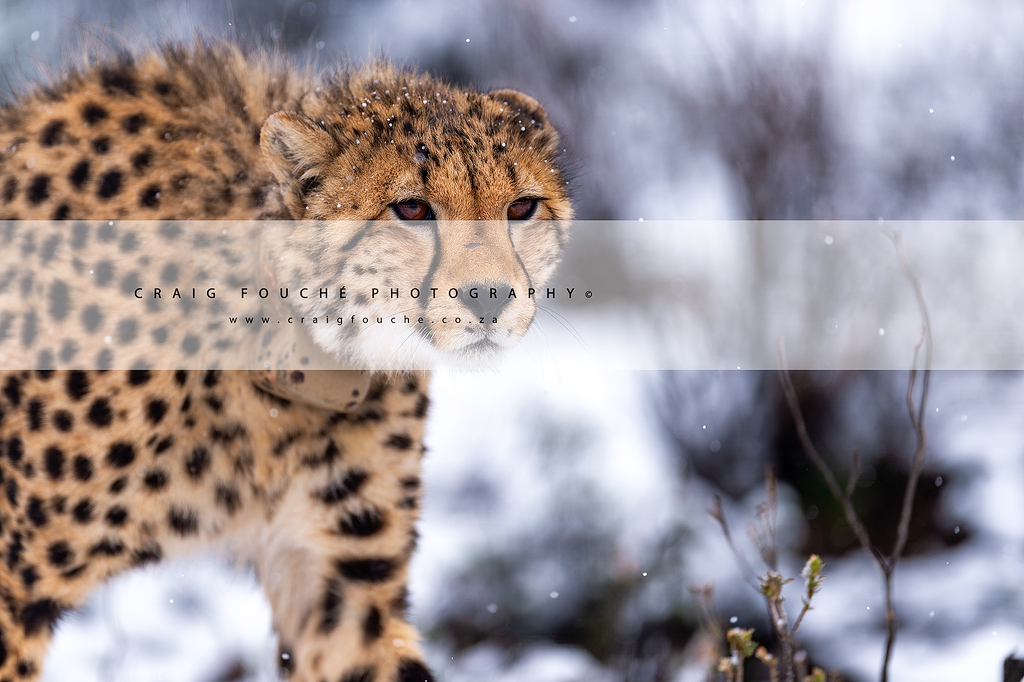
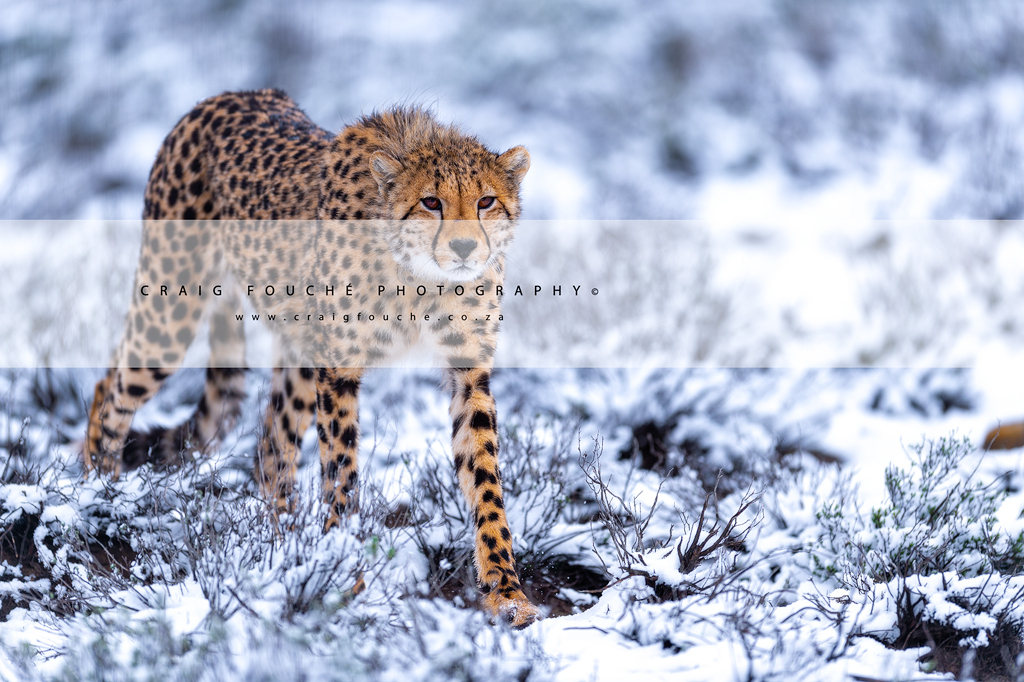
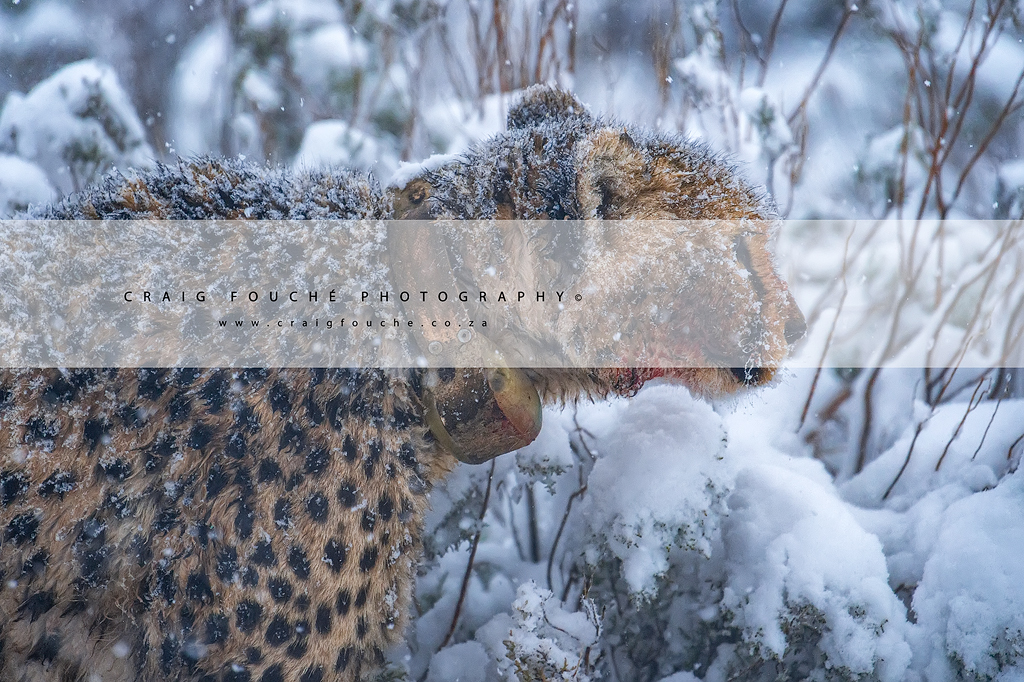
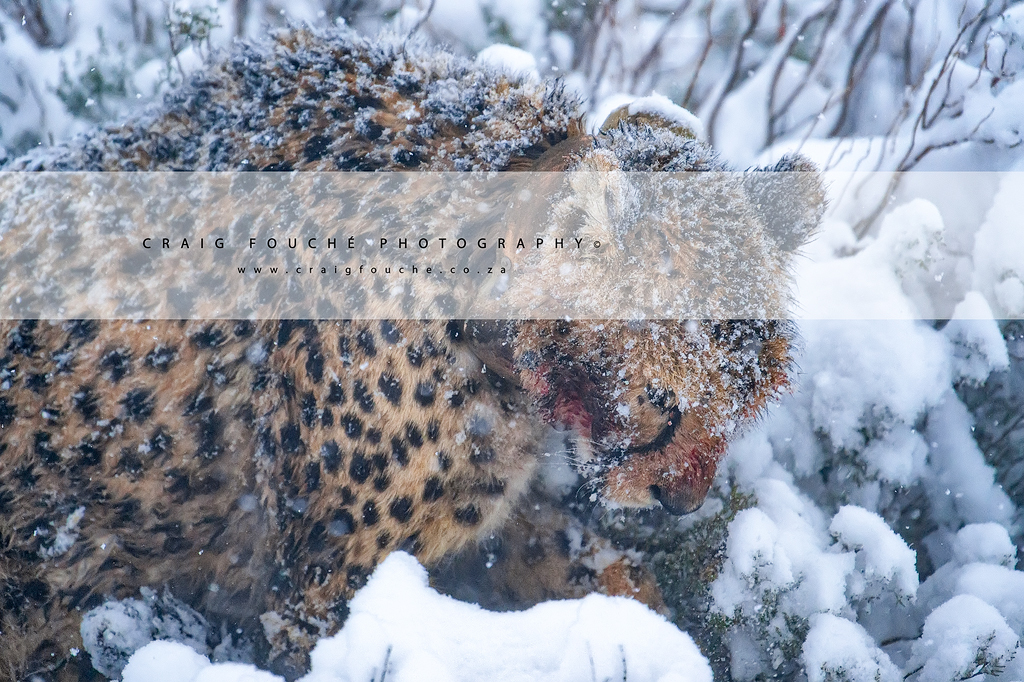
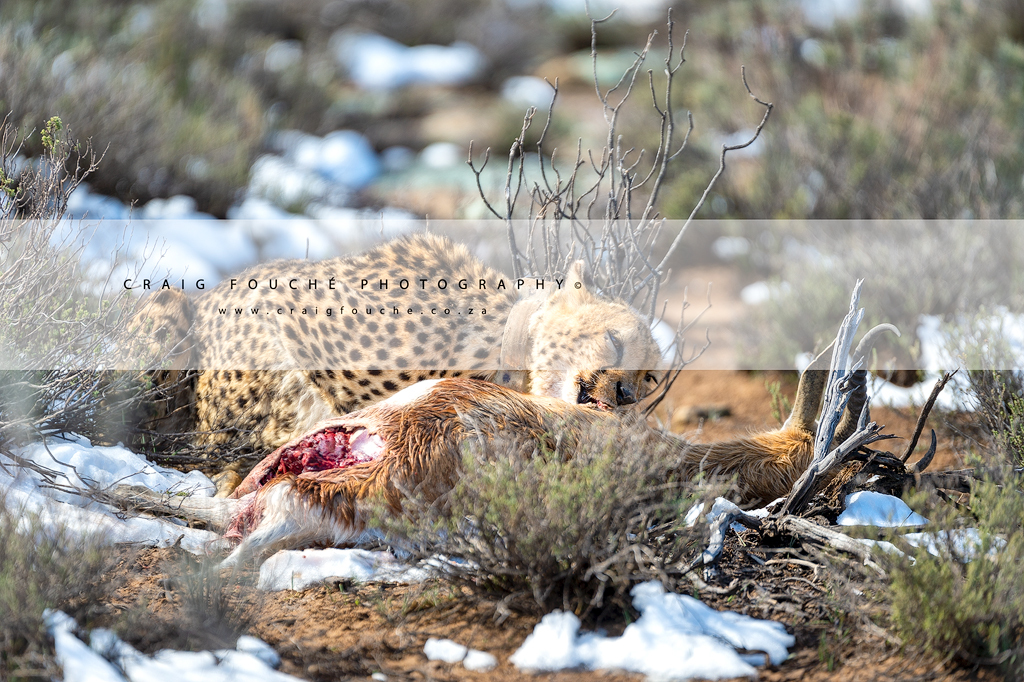

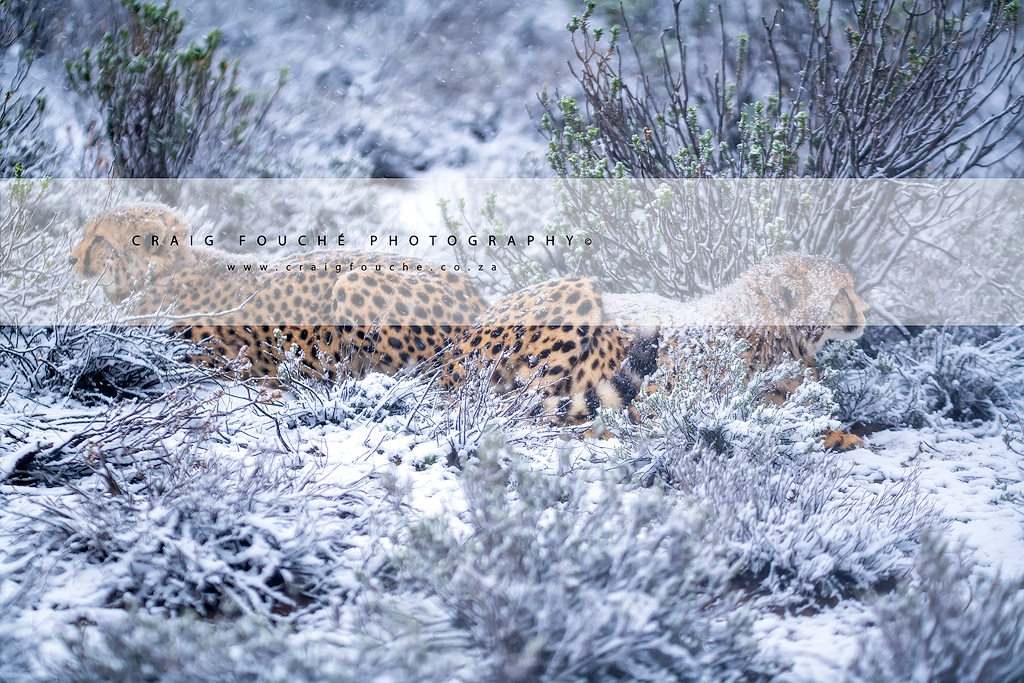
Mona


Weg! Magazine Publication
In Conclusion
It was a wonderful and rare experience that happened for us. I have no idea if and when it would be repeated as conditions have to be so perfect and it is really a case of being in the right place at the right time. Selected prints will be available from this series.
If you would like to join me on either a digital or film photography photo workshop experience, get in touch! I can teach you all I know, sign up for one of my one-on-one or group photo workshops.



0 Comments