5x7 Large Format Film Photography
5×7 Large Format Film Photography
Elegant | Balanced | Understated
The Forgotten Classic Of Fine Detail
Craig Fouché Photography embraces the 5×7 format for its graceful proportions, exceptional tonal subtlety and the slower, more deliberate approach that defines traditional large format photography. In the lineage of large format photography, the 5×7 occupies a quiet but significant chapter. Once a common professional format, it bridged the worlds of 4×5 precision and 8×10 grandeur. Today, it stands as one of the more elusive formats — cherished by those who understand its balance, proportions, and distinct tonal qualities. For me, the 5×7 is not a compromise between formats, but a statement in itself — a refined tool for photographers who value subtlety and control.
A Format of Perfect Proportion
The 5×7 aspect ratio holds a compositional elegance that is immediately recognisable. It offers a slightly wider view than 4×5, yet retains intimacy and focus. This proportion lends itself beautifully to portraiture and landscape work alike — spacious enough for environmental context, but restrained enough to maintain a sense of closeness.
Working in 5×7 demands the same discipline and patience as all large format photography. Every step — from setting up the camera and focusing on the ground glass to loading individual film holders — is deliberate. Each exposure is a singular act of intention, guided by instinct and technical mastery rather than automation or digital convenience.
A Rarity in Colour, A Strength in Monochrome
While colour film for 5×7 has become a rarity, available only through special order from Kodak, black-and-white film continues to thrive in this format. The scarcity of colour emulsions makes each exposure precious — a conscious decision to preserve the alchemy of analogue colour in an age of pixels and sensors.
For monochrome work, I rely on ADOX and Ilford films. Both provide remarkable tonal integrity, but ADOX in particular delivers an exquisite combination of clarity and grain control that reveals subtle gradations of light and shadow. Its response to the unique African light — sharp, dry, and luminous — is unmatched. The resulting negatives are finely detailed, carrying an almost sculptural sense of texture and form.
Bridging Worlds
The 5×7 format sits gracefully between two photographic philosophies. On one hand, it shares the mobility and manageable workflow of the 4×5; on the other, it edges toward the depth and visual authority of the 8×10. This makes it an ideal choice for photographers who seek both flexibility and fine-art fidelity.
It’s also a format that rewards patience. Developing 5×7 film is a tactile process, one that connects you to the craft at every step — from tray development in the darkroom to the careful drying and archiving of each sheet. The scanning and printing of such negatives reveal an astonishing range of tone and resolution that rivals larger formats while maintaining its own elegant footprint.
A Format Reborn in Craft
For Craig Fouché Photography, the 5×7 is a celebration of restraint and revival. In a world of instant imagery and infinite editing, this format offers an antidote — a slower, purer engagement with the act of seeing. Every 5×7 image is a conversation between light and patience, chemistry and craft.
Whether capturing the vast open spaces of the Karoo, the rolling mountains of the Western Cape, or the delicate tonalities of a soft winter sky, the 5×7 format translates these scenes into timeless studies of form and light.
The 5×7 may be rare today, but within its quiet frame lies something enduring — a reminder that photography’s true essence still lives in the discipline of making, not merely taking.
Appreciating Subtlety
The 5×7 format taught me that not every step forward in photography has to be dramatic. It occupies a wonderfully balanced place between portability and presence, offering negatives that are beautifully detailed without demanding the sheer scale of the larger formats. Working with it encourages a quieter way of seeing—one that values refinement over spectacle.
Each sheet of 5×7 film reminds me that craftsmanship often reveals itself in subtle ways. The format asks for patience, careful observation and thoughtful composition, rewarding those qualities with negatives that possess remarkable tonal grace and an enduring sense of calm.
Film is not a relic. It’s a living medium—and in a world of automation and artificiality, it stands as a quiet rebellion.
Film is still very much alive. And so is the craft.
Explore the Collection
Discover the Fine Art Film Collection — a curated body of work that invites viewers and collectors alike to experience the grandeur of Africa’s landscapes through the expansive lens of medium & large format film.
Film is not a relic. It’s a living medium — and in a world of automation and artificiality, it stands as a quiet rebellion.
Film is still very much alive. And so is the craft.
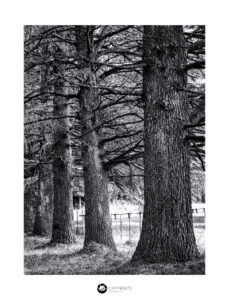
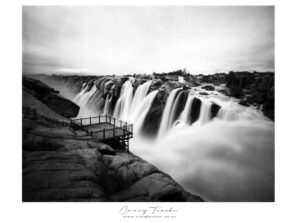
5×7 FILM GALLERY


MORE ON 35MM FORMAT FILM

35mm
MORE ON MEDIUM FORMAT FILM
4×4

645
6×6
6×7
6×8
6×9
6×12
6×17
MORE ON LARGE FORMAT FILM

4×5
4×10
8×10
MORE ON ULTRA LARGE FORMAT FILM

7×17