Macro Photography
Macro Photography
Small | Seen | Sublime
Discovering Worlds Within Worlds
Craig Fouché Photography explores macro photography by revealing the intricate details of insects, plants, minerals and natural textures that often remain invisible to the naked eye. Macro photography opens a door into a world most people will never truly see. It is the art of bringing the unseen to life — the curve of a petal, the fragile armour of an insect, the crystalline structure of a mineral, or the delicate geometry of a water droplet suspended in time. While many genres of photography speak to grand scenes or human emotion, macro photography speaks to intimacy. It invites the viewer to slow down, to observe, and to rediscover wonder in the familiar.
Traditionally, macro photography is defined as any photographic capture in which the subject is rendered at life size or greater on the camera’s sensor — a 1:1 magnification ratio or beyond. But in practical terms, macro photography has become synonymous with the creation of images that reveal extraordinary detail: subjects so small that the naked eye could never appreciate their complexity without help. Whether using a dedicated macro lens, extension tubes, bellows, or a reversed-lens setup, the goal remains the same — to enter into ‘near space’ and draw attention to patterns, textures, and structures that usually go unnoticed.
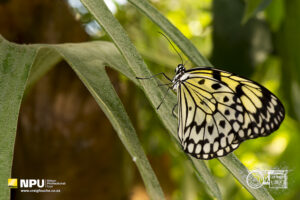
One of the defining challenges of macro work is depth of field. When working at extreme magnifications, focus becomes razor-thin: a slight shift can throw an entire subject out of clarity. To overcome this, many photographers turn to focus stacking — a technique in which multiple images, each focused at a different point, are combined to produce a single frame of crisp, continuous detail. For subjects such as insects, where precision is essential, this technique allows for highly detailed portraits that feel almost sculptural in their dimensionality.
Technical tools also play a vital role in the craft. A focusing rail, for example, allows the photographer to make incremental shifts forward or backward, enabling extremely accurate control over focus. Magnifying eyepieces and right-angle viewfinders make it easier to compose shots when the camera must be positioned close to the ground or at awkward angles. Cameras with live-view functionality further enhance the experience, allowing for real-time adjustments without relying solely on the optical viewfinder. These tools are not essential for beginners, but they become invaluable as one dives deeper into the discipline.
Despite its technical nature, macro photography is not merely about equipment. Its true power lies in transforming the ordinary into the extraordinary. Textures become landscapes. The eye of a dragonfly becomes a mosaic. A drop of dew becomes a lens that reframes the world. The process demands patience — sometimes hours spent watching, waiting, focusing, and refocusing — but the reward is profound. Macro photography teaches us to be attentive. To look more closely. To appreciate the complexity woven into every detail of the natural world.
For many photographers, the real joy of macro work lies in its ability to surprise. No two sessions are ever the same. Lighting shifts, insects move, wind interferes, and subjects react unpredictably. Yet it is within this unpredictability that creativity flourishes. Macro photography is both technical and meditative: a meticulous process that encourages curiosity, steadiness, and persistence.
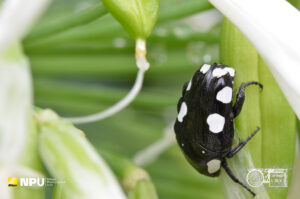
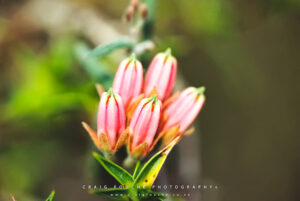
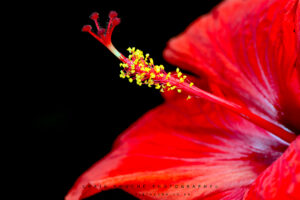
Whether capturing the iridescence of a beetle’s shell, the crystalline edges of frost, or the velvety surface of a flower petal, macro photography invites viewers into an intimate visual experience. It expands our understanding of scale and beauty, reminding us that the smallest corners of the world are often the most remarkable. To create a large, detailed print from something smaller than a fingernail is deeply satisfying — a celebration of patience, precision, and the hidden artistry of nature.
A Closer Look
Macro photography reminds us that extraordinary beauty often exists in the places we overlook. The smallest subjects reveal remarkable complexity when approached with patience, curiosity and careful observation.
From delicate flowers and intricate insects to textures shaped by nature and time, macro photography celebrates a world where every detail tells its own story and every close look reveals something new.
Explore the Collection
Discover the Fine Art Digital Collection — a curated body of work that invites viewers and collectors alike to experience the grandeur of Africa’s landscapes through the expansive lens of digital format.
MACRO GALLERY

MORE ON DIGITAL LANDSCAPES

Aerial

Architecture

Astrophotography

Cityscapes

Industrial

Infrared

Seascapes
MORE ON DIGITAL PORTRAITS

Portraiture
MORE ON DIGITAL SPORT

Sport
MORE ON DIGITAL BLACK & WHITE

Black & White
MORE ON DIGITAL TRAVEL & WILDLIFE

Travel

Wildlife