


Large Format In The Studio – Mornay
During the past week of rain and snow I contacted my friend Mornay wanting to test out my constant lighting by Godox and titled this shoot – Large Format In The Studio – Mornay. The lights that I am using are the Godox SL-200 LED Video Light (Daylight-Balanced). As the name implies this is video lighting. Any user of large format photography will know that these big boxes with a bellows and a lens need lots of light, that’s exactly what I wanted to see, but just how much!
Mornay and I have worked together before, and he is a good friend of mine. He is a professional drummer and teacher with an easy going personality and made a brilliant model for my test shoot. The mood board was simple, jeans and a white shirt and to be yourself, we are shooting large format in the studio in black & white!
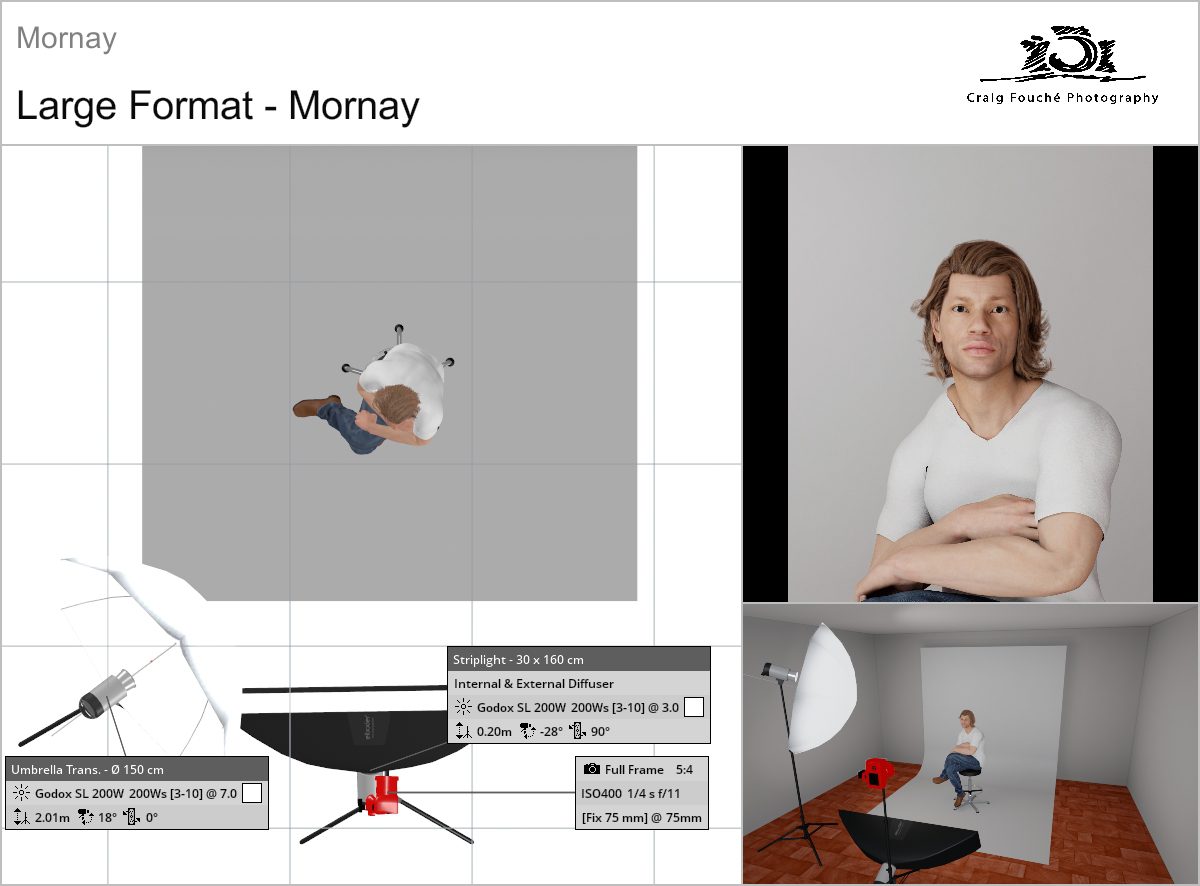
Studio Lighting Plan Setup
I have used set.a.light 3D STUDIO to recreate my studio setup. This is a fantastic tool for planning any studio shoot without having to go to the studio, everything is done on computer and the results are realtime and precise.

3D Lighting Model Lighting Preview
The Film
Kodak Professional T-Max 400
Kodak’s Professional T-Max 400 is a high-speed panchromatic black and white negative film featuring a unique T-GRAIN emulsion to provide a very fine grain structure with a high degree of sharpness and edge detail. It has a nominal sensitivity of ISO 400/27° along with a wide exposure latitude for rating the film up to EI 1600 and push developing. Its versatility benefits working in difficult lighting conditions and with moving subjects, and its fine grain profile, broad tonal range, and high resolving power benefit scanning and enlarging applications.
Kodak Tmax 400 their sharpest black & white film
I shot with Kodak and some very old expired Ilford HP5 from 1987. The Ilford film unfortunately did yield any images. I have no idea how it was previously stored, but can only expect that perhaps very long exposures and perhaps stand developing in Rodinol may do the trick. A total of two frames were exposed on Ilford and a total of four on Kodak, totalling six images. A pack of 10 sheets of 4×5 film costs around ZAR1500.00, large format is not cheap, but oh so rewarding and the quality is astounding as you can see below.
Rollei RPX 400
The history of Rollei RPX 400 is a bit murky. The film is made or finished by Ilford, and the Rollei name is licensed to brand it. RPX 400 is a triacetate base, panchromatic, high-speed black-and-white negative film available in 35mm canisters, 35mm 100′ bulk rolls, 120 medium format rolls and 4 x 5 sheets. It’s distributed by Maco (Hans O. Mahn GmbH & Co. KG, Maco Photo Products), a Germany-based supplier of photographic films, and sold under the brand name Rollei (licensed from Rollei GmbH & Co. KG). The company says that Rollei RPX 400 is a new and fresh emulsion based off of the highly adored Agfa APX emulsion.
Rollei RPX 400 is a great example of why you should make a point to break out of film habits from time to time and try other films. Ask a fellow photographer which black and white film you should try and odds are you will hear: “Tri-X”, “HP5” or maybe even “TMax” or “Delta 400”. And these films get recommended for good reason. Some photographers live their whole lives on films like Kodak Tri-X, Ilford FP4 & HP5, Fuji Acros etc which are fine films and if you never shot anything else, you’d probably be perfectly happy not knowing what you are missing, but there is quite a variety among black and white films and some films offer a different feeling, look, or texture to the images that can really outshine these other emulsions in certain circumstances.
Rollei RPX is a softer contrast film that produces a wonderful stretch of tonality throughout the image, all the while built from a traditional-looking grain structure. This is my first time shooting Rollei RPX 400 and I really like this film! The results turned out wonderfully as the film’s softer tonal scale can handle the harsh contrast of summer sun and harsh lighting well.
The Quality And Detail
I have sampled the second-last image in this blog at different zoom scales, starting at 25%, 33%, 50%, 66% and finally 100%. The detail that Kodak’s Professional T-Max 400 holds is phenomanel, especially for an ISO 400 high-speed panchromatic black film. Click on each individual image to see them in full screen mode.
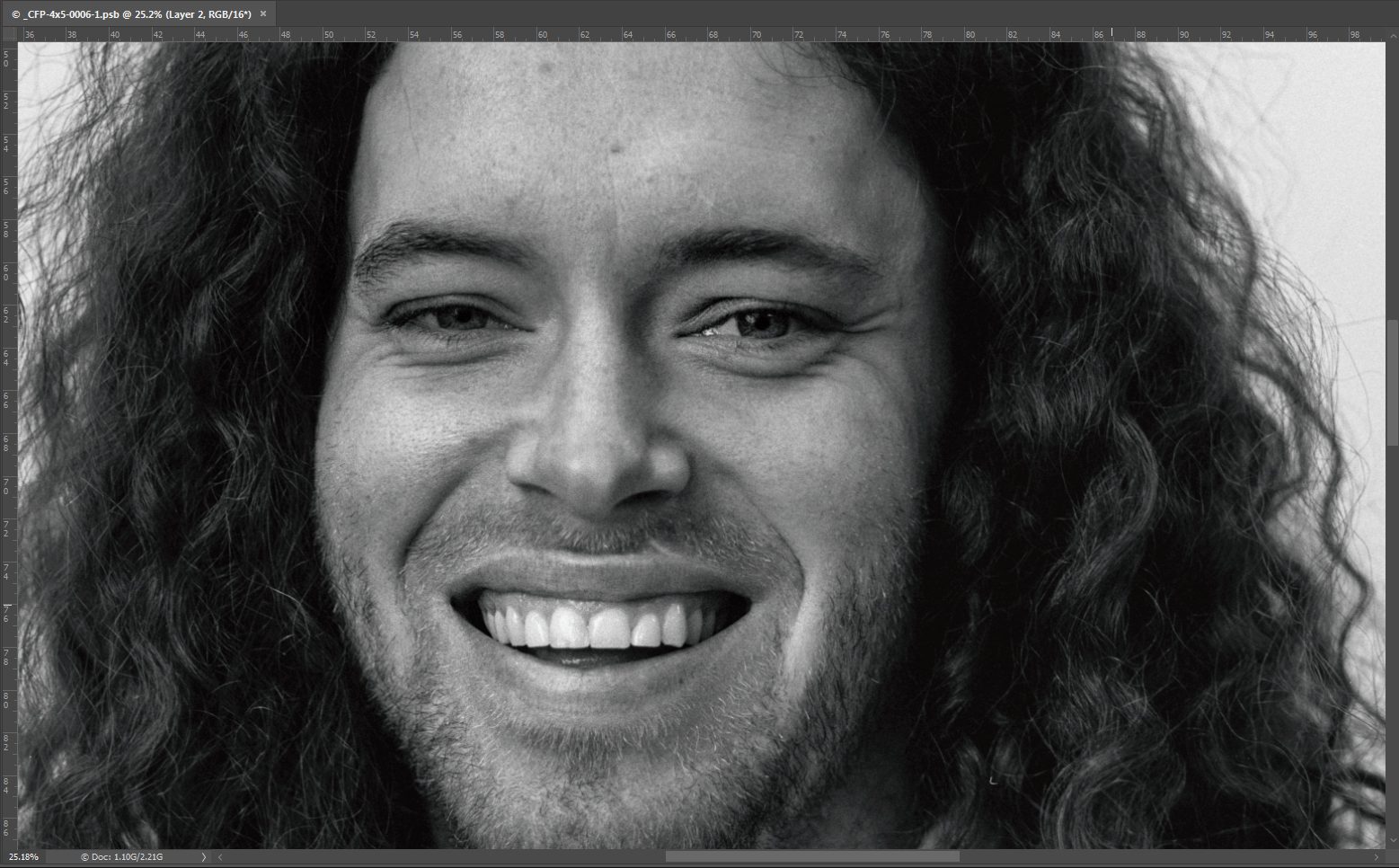
25% Zoom In Photoshop – Working file size 2.21Gb
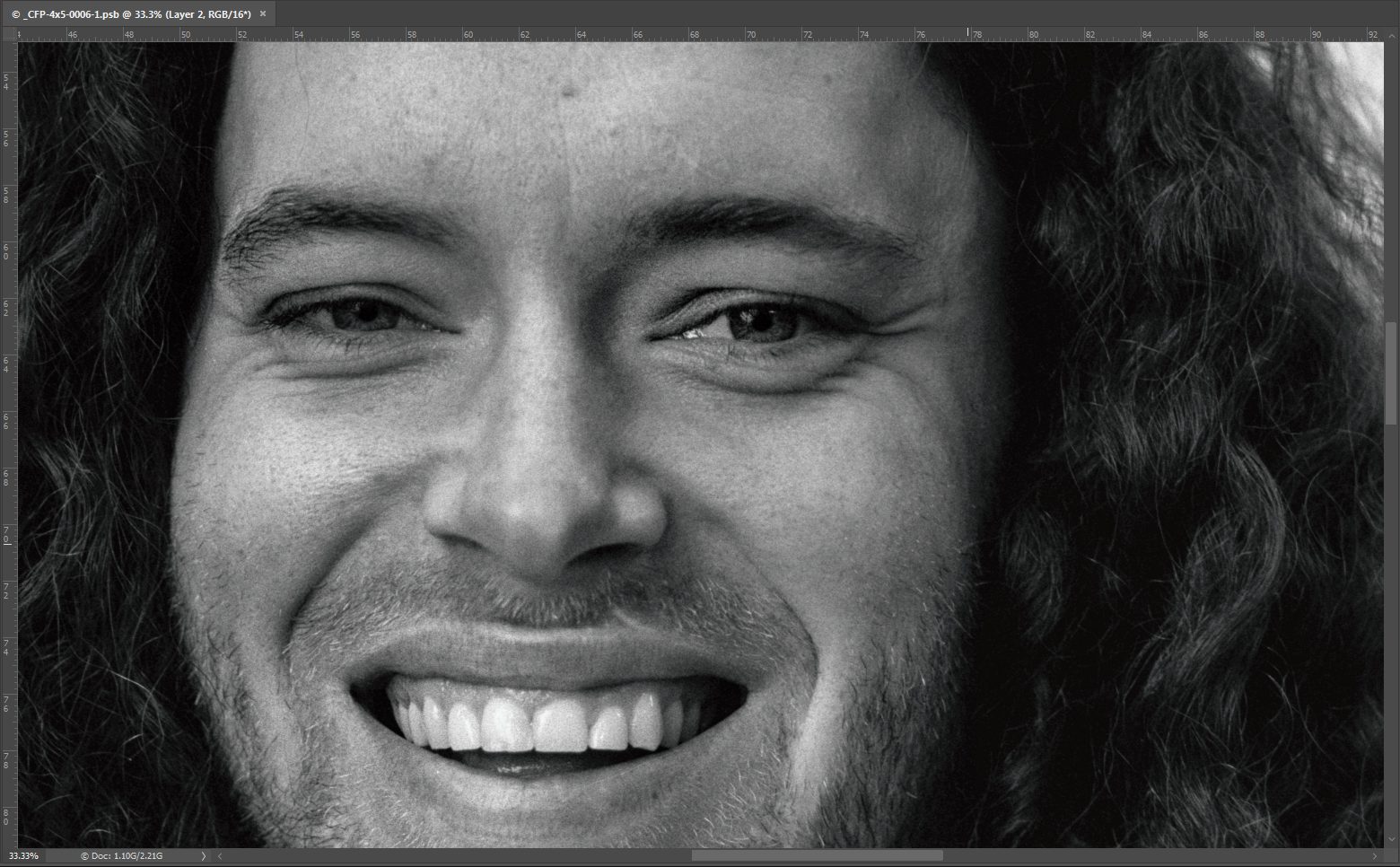
33% Zoom In Photoshop – Working file size 2.21Gb
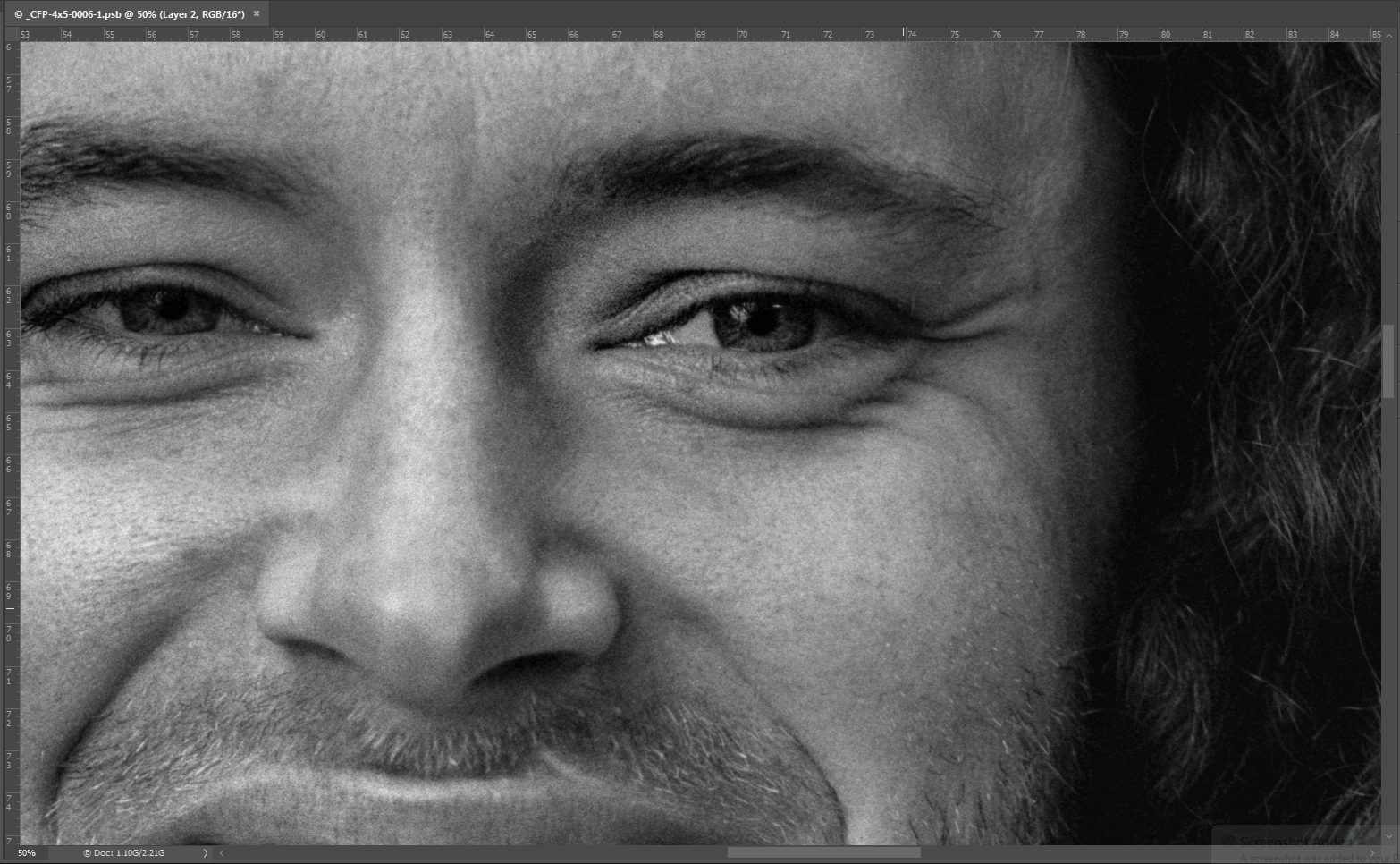
50% Zoom In Photoshop – Working file size 2.21Gb
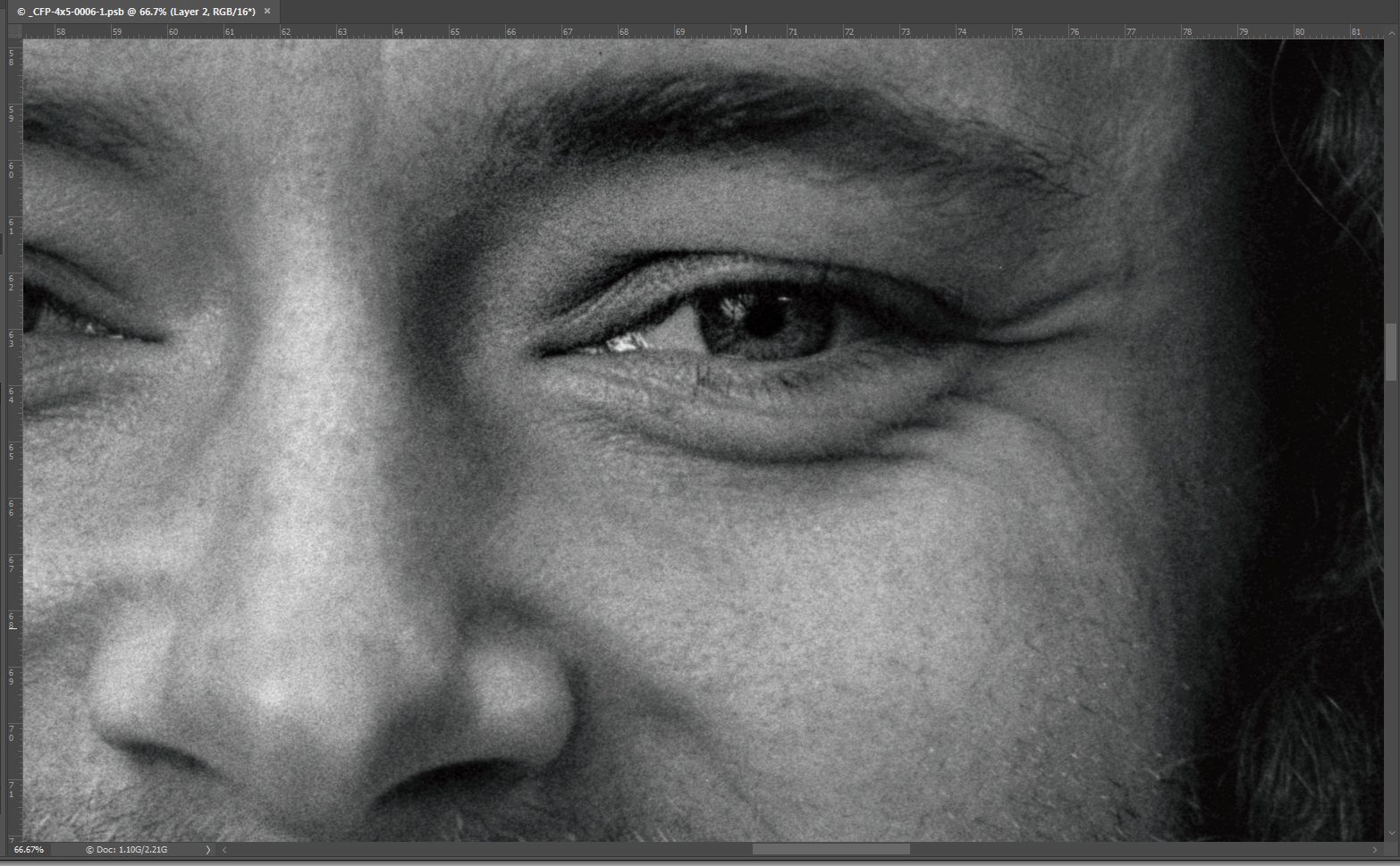
66% Zoom In Photoshop – Working file size 2.21Gb
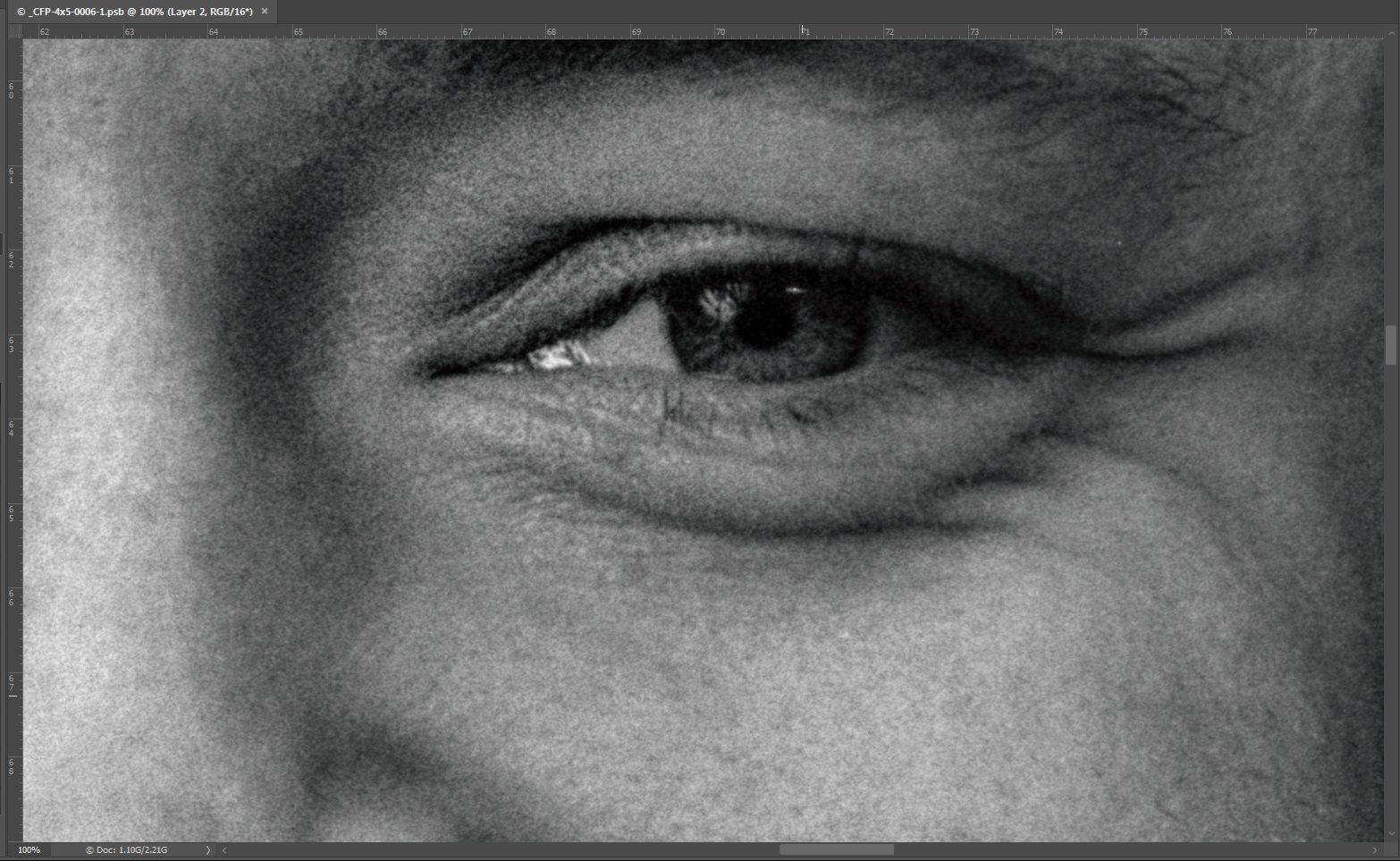
100% Zoom In Photoshop – Working file size 2.21Gb
Gallery
The images are of a high resolution nature and may take time to load. Click either on the advance arrow or on the image itself to view as a large single image.

Mornay – Kodak Tmax 400 | Shen-Hao HZX 45-IIA, Nikon W 240mm Lens f/11 at 1/8sec

Mornay – Kodak Tmax 400 | Shen-Hao HZX 45-IIA, Nikon W 240mm Lens f/8 at 1/4sec

Mornay – Kodak Tmax 400 | Shen-Hao HZX 45-IIA, Nikon W 240mm Lens f/11 at 1/8sec

Mornay – Rollei RPX 400 | Shen-Hao HZX 45-IIA, Nikon W 240mm Lens f/11 at 1/8sec

Mornay – Rollei RPX 400 | Shen-Hao HZX 45-IIA, Nikon W 240mm Lens f/11 at 1/8sec
My Conclusion
My conclusion is there is simply no substitute for studio flash lighting. Using constant lighting as I have will work, but shutter speeds will be low, in my case I shot at f/5.6, f/8 and f/11. It was not possible to get shutter speeds higher than 1/30 and my lowest was 1/4 sec. All in all it was a fun shoot, Mornay had the opportunity to see how the process is run from loading film, shooting in the studio and to finally mixing the chemicals and developing the film sheets. He had the opportunity to capture me behind the camera, unfortunately, it was on the two Ilford sheets that didnt come out.

Mornay – Kodak Tmax 400 | Shen-Hao HZX 45-IIA, Nikon W 240mm Lens f/11 at 1/8sec
Overall I am very happy with how the results turned out, it is always a good day out when everything runs smoothly and after developing you have images. It never gets old when you open the Paterson tank and your negatives look good! Negatives were scanned on my Epson V750 at 3200dpi, Photoshop file sizes are around 750mb to over 1Gb as a working file. If you would like to join me to shoot some film photography – large format in the studio, or any other environment, get in touch! I can teach you all I know, sign up for one of my one-on-one photo workshops.




0 Comments